You notice it first at the supper table. Your child keeps a hand near their chin, or a fringe stays pulled low, or the phone camera stays switched off on video calls. What you want is not perfect skin. You want a teenager who stops hiding. Good teenage acne skincare gets you part of the way there, and the conversation around it does the rest.
This guide is for parents of 13 to 18 year olds. It covers what helps, how to bring it up without a fight, and how to keep the whole thing simple enough that a teenager still does it in week six.
Why teenage acne skincare feels so personal
Breakouts at that age are rarely only about skin. A spot on the day of a school photo feels like a public announcement. Your teenager is already deciding who they are, and a face that will not cooperate gets in the way of that.
Knowing the cause helps you stay calm. Hormones change how much oil the skin makes, and that oil mixes with dead skin cells inside the pore. The pore blocks, and the area around it gets red and sore. It is not dirt, it is not laziness, and it is not what they ate yesterday. Teenagers who already scrub twice as hard as they should tend to make things worse, so the first job is to tell them they have done nothing wrong.
How to start the conversation
Pick a calm moment that is not in front of anyone else: in the car, on a walk, while you are cooking together. Avoid the bathroom mirror, and avoid starting with “your skin looks bad”.
Start from their side instead. Something like: “I’ve noticed you seem bothered by your skin. I had the same thing at your age. Want to sort it out together?” If you did not have breakouts yourself, say that you would like to learn alongside them. Then let them lead. Some teenagers want to talk for an hour, some want a single nod and a bottle on the bathroom shelf. Both are fine.
Let them have a say in what goes on their face. A teenager who chose the products is far more likely to use them than one who was handed a bag.
What actually helps breakouts
Three things matter more than any single product: a gentle cleanse, an ingredient that works inside the pore, and something to keep the skin comfortable so it does not dry out and overproduce oil. Harsh scrubs, alcohol-heavy pads and skipping moisture all tend to backfire.
Here is how that looks in practice, using the Clarity range, which is made for acne-prone and congested skin.
No 17 Brightening Foaming Cleanser (R239) is the first step. It is a gentle foaming face wash made with sugar-derived cleansers and no sulphates, with aloe vera and panthenol so the skin does not feel tight afterwards. Liquorice root extract adds brightness without an acid. One to two pumps of foam, 30 to 60 seconds, lukewarm water. Tight, squeaky skin is not the goal.
No 11 Clarity Active Toner (R239) is an alcohol-free mist. Niacinamide supports the skin barrier and the look of smaller pores, and centella asiatica helps calm the look of redness. For a teenager, a mist is easy: hold it 20 to 25cm away, spray, pat in with the palms, done.
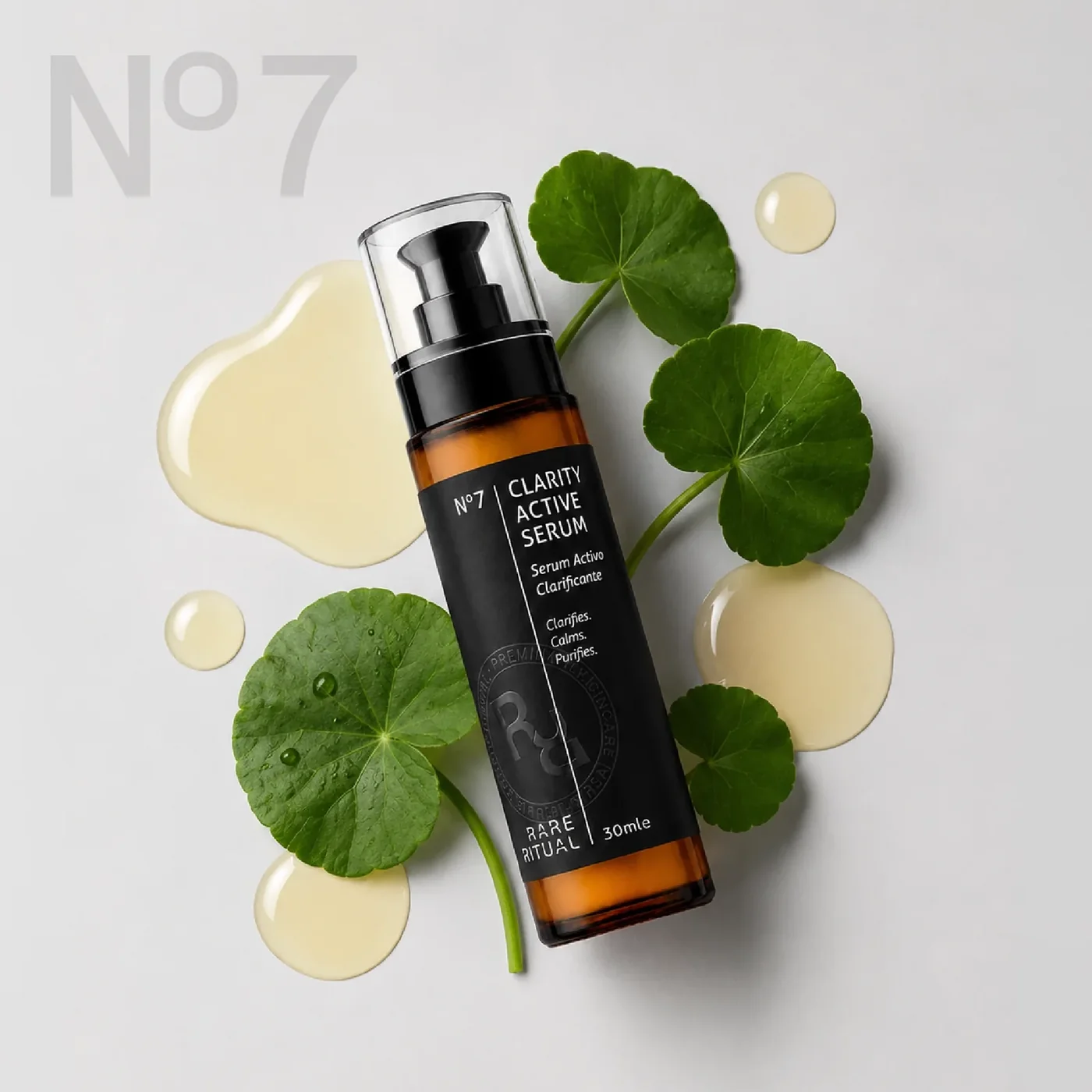
No 07 Clarity Active Serum (R680) is the one doing the focused work. Salicylic acid is a BHA, which means it is oil-soluble and works inside the pore rather than only on the surface. It helps dissolve the mix of oil and dead skin that blocks pores. Centella, blue tansy, allantoin and panthenol sit alongside it so the acid does not leave the skin feeling stripped. Use 1 to 2 pumps. Because it is an acid, start with evenings only and add mornings once the skin has settled. If you want to read how it works in more detail, we wrote about how salicylic acid works inside the pore.
No 03 Clarity Oil Serum (R780) surprises most parents, because an oil on a spotty face sounds wrong. The thinking is that acne-prone skin tends to be short of linoleic acid, which can leave oil thicker and stickier inside the pore. Kalahari melon seed oil is rich in linoleic acid and light on the skin, and bakuchiol and black seed oil sit alongside it. Use 1 to 2 pumps. It has no water and no preservative. This is the step to add later, once the first three feel like habit. Our post on facial oil for acne explains the reasoning.
Keep the Ritual short enough to survive
The best teenage acne skincare is the one that gets done on a Tuesday night when homework is late and the phone is buzzing. A twelve-step list will last four days. Start with two things and build from there.
Weeks one and two: cleanse with No 17 morning and evening, and use No 07 in the evening. That is it.
Weeks three and four: add No 11 after cleansing, if the skin is comfortable. Add No 07 in the mornings too, if there is no stinging or peeling.
After that: add No 03 if the skin still feels dry or reactive, or if you want a calmer finish.
Put the products where they are used, next to the basin and not in a cupboard. Link the Ritual to something that already happens, like brushing teeth. And agree up front that nobody is checking. A teenager who feels watched will quietly stop.
How long until you see a difference
Be honest here, because a disappointed teenager is a teenager who quits. Pores take weeks to clear and skin renews itself on its own slow schedule. Most people need a good six to eight weeks of steady use before they judge. Skin can look a little worse before it settles as congestion comes to the surface. Tell your child that this is possible, so it does not feel like failure.
Keep the other basics in the background without making speeches about them. Clean pillowcases, no picking, and no hot water on the face. One quiet mention is enough.
When to see a doctor or dermatologist
Skincare helps with mild to moderate breakouts. If your child has deep, painful lumps, scarring, or spots that spread to the back and chest, or if the breakouts are clearly affecting their mood and confidence, book a visit with a doctor or dermatologist. That is not a failure of the Ritual. Some skin needs medical care, and a good Ritual can sit alongside it.
Do the Ritual Finder together
The easiest way to make this feel like their project and not your project is to sit down together at the Ritual Finder. It takes a few minutes. Your teenager answers the questions about their skin and what bothers them most, and it builds a Ritual from the answers. Because they typed the answers themselves, the result belongs to them.
You will probably end up close to the four steps above. If their skin is sensitive or they have other concerns, it will tell you where to adjust. Either way, you will both leave with a short, clear plan and a reason to start tonight, not next month.