You shave, you rinse, you look in the mirror, and a week later there is a dark patch along your jaw that was not there before. Or a scatter of small brown dots on your shins that outlast the razor bumps that started them. If you have dark spots after shaving, you are not imagining it, and you are not alone. This is one of the most common skin complaints for men and women alike, and it has very little to do with how clean you keep yourself.
What most people want is simple: to shave without thinking about it afterwards. No checking the mirror, no choosing long trousers, no wondering if the mark is getting darker. It takes a few changes at the basin and a little patience, because skin does not clear marks overnight.
Why you get dark spots after shaving
A razor does two things at once. It cuts hair, and it scrapes a very fine layer off the top of your skin. Add a dull blade, a dry shave, or a second and third pass over the same patch, and the skin reacts the way it does to any small injury: it becomes inflamed. You might see redness, a few bumps, or nothing at all that you would notice.
Inflammation tells the pigment cells in your skin to make more melanin. Once the redness settles, the extra pigment can stay behind as a flat brown or greyish mark. This is called post-inflammatory hyperpigmentation, and it is the reason dark spots after shaving show up where the shaving friction is worst: the jawline, the neck under the chin, the bikini line, the underarms and the lower legs.
Ingrown hairs make it worse. When a cut hair curls back into the skin, the body treats it as a splinter. The bump that follows is inflamed, and the mark it leaves can last far longer than the bump did. Deeper skin tones tend to show these marks more clearly, because there is more melanin available to respond.
Shave in a way that gives marks less to start from
Every mark begins with irritation, so the quickest win is less irritation. None of this needs special equipment.
Soften the hair first. Shave after a warm shower, or hold a warm, damp cloth against the area for a minute. Cleanse with something gentle, because a harsh wash leaves skin tight and more likely to react. No 17 Brightening Foaming Cleanser uses sugar-derived cleansers with no sulphates, along with aloe vera and panthenol, so skin is not left tight afterwards. Use 1 to 2 pumps of foam, work it in for 30 to 60 seconds and rinse with lukewarm water.
Use a sharp blade and change it often. A dull blade drags, and dragging is what inflames skin. Shave in the direction the hair grows, with light pressure, and resist going back over the same spot. If you need a closer shave, go across the grain on a second pass rather than against it, or accept slightly less closeness for skin that stays calm.
Leave the area alone for a few minutes. Do not scratch, do not pick at bumps, and do not scrub with a rough cloth to “clear” an ingrown hair. Picking is one of the most reliable ways to turn a small bump into a lasting mark.
What helps the look of dark spots after shaving
Once a mark has formed, the goal is to help it look more even over time while keeping new irritation to a minimum. Two things work together here: calming the skin straight after a shave, and using ingredients formulated to support a more even-looking tone.
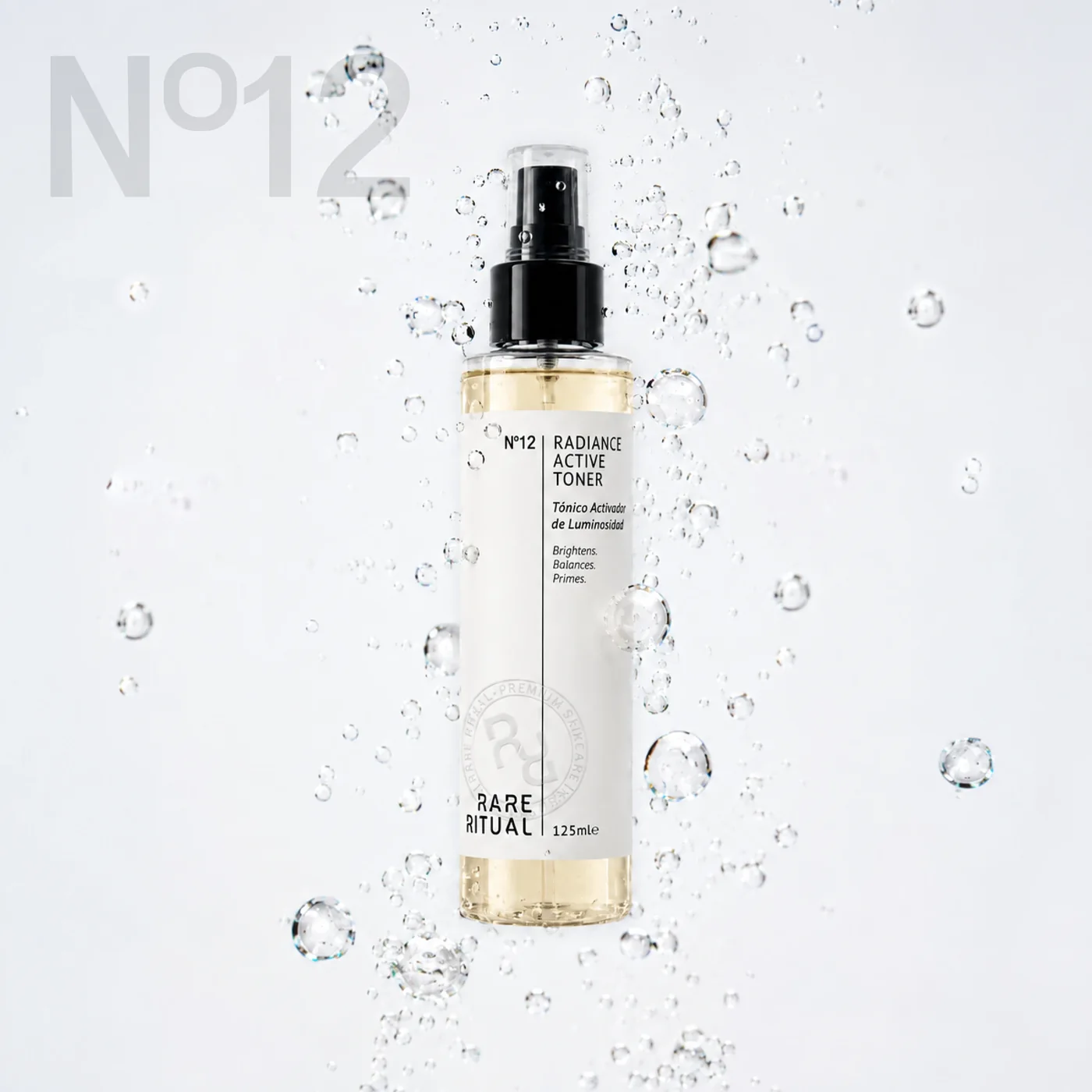
For the jaw and neck, No 12 Radiance Active Toner is a good place to begin. It is an alcohol-free toner, so it does not sting freshly shaved skin. Niacinamide supports a more even-looking tone and barrier function, liquorice root extract brings glabridin, which has long been used for brightness, and allantoin and panthenol keep it comfortable. The base is neroli hydrosol, which is also why it smells the way it does. Mist it over clean skin and pat gently.
If you have marks that have been there a while, add a serum. No 08 Radiance Active Serum Reset is made for marks that are already there. Alpha-arbutin works on the tyrosinase pathway, the enzyme process that drives melanin production, and kojic acid approaches the same pathway by a second route, so the two work together. Liquorice root extract adds to a more even-looking tone, and frankincense hydrosol forms the water base in place of plain water. Use 1 to 2 pumps after your toner. It can be used on the face and neck.
For the other half of the picture, No 09 Radiance Active Serum Prevent is built for the marks that have not formed yet. Tranexamic acid acts on the signalling that tells skin to make pigment in the first place, while ascorbic acid and glutathione are antioxidants, and N-acetyl glucosamine supports a more even-looking tone alongside them. It is designed to help minimise the look of future uneven tone, which matters if you know your skin tends to mark every time you shave. Use 1 to 2 pumps, and it can be used on the face and neck.
You do not need all of these at once. A simple order works well: No 17 to cleanse, No 12 as your toner, then No 08 if you are working on existing marks or No 09 if you mostly want to help new ones from showing up. Let each step absorb before the next, lightest to richest. If you are not sure which pair suits you, the Ritual Finder will point you in the right direction in a couple of minutes.
What patience actually looks like
This is the part nobody enjoys. Dark spots after shaving do not fade in a week. Skin renews itself on a cycle of weeks rather than days, and pigment sits in the skin for a while before it clears. Most people who stay consistent should expect to measure change over a few weeks, with marks looking lighter and less defined along the way rather than vanishing in a single step.
A few things make that stretch easier. Take a photo in the same light every two weeks: marks look unchanged day to day and clearly different fortnight to fortnight. Keep shaving habits steady, because new irritation adds fresh marks while old ones clear. And keep your skincare simple enough that you will actually use it twice a day. A short Ritual done every day does more than an elaborate one done on Sundays.
If a mark is raised, bleeding, changing shape or colour quickly, or simply worrying you, show it to a doctor or dermatologist. Shaving marks are almost always harmless, but you should never guess about a mark that behaves differently.
For more on how the brightening ingredients work, read how alpha-arbutin and kojic acid work on dark marks.
Dark spots after shaving need habits and time
The aim is a shave you forget about by the time you have dressed. Gentle habits give marks fewer chances to begin, a calm toner keeps freshly shaved skin comfortable, and a serum chosen for what you are dealing with, existing marks or future ones, gives your skin ingredients formulated to support a more even look over the weeks ahead. Start with the toner, add a serum when you are ready, and give it time.
Not sure where to begin? Answer a few questions in the Ritual Finder and see the Ritual that fits your skin and your mornings.