The case for ingredients for dark circles and puffiness starts with a simple observation. The skin around the eye is the thinnest on the face, among the most mobile, and among the first to show visible signs of fatigue, aging, and environmental stress. Fine lines appear here before they appear anywhere else. Puffiness in the morning can be the result of something as simple as poor sleep or high sodium the night before. Dark circles are more complex: in most cases they are caused by a combination of blood pooling in the fine capillaries beneath the skin, and the very thinness of the periorbital skin making those capillaries visible.
What separates effective ingredients for dark circles and puffiness from generic eye creams: a working formula has to address three things at once — pigment turnover, lymphatic drainage, and the thinner lipid barrier under the eye. The most evidence-supported ingredients for dark circles and puffiness combine vasoactive actives with peptides and antioxidants. Used consistently, these ingredients for dark circles and puffiness produce visible change.
For anyone looking for ingredients for dark circles and puffiness that have research behind them, rather than marketing claims, the picture is clearer than most skincare marketing suggests. There are specific actives that work on specific mechanisms. Here is what those mechanisms are and what the evidence says about each ingredient.
Caffeine: One of the Most Studied Ingredients for Dark Circles and Puffiness
Caffeine is one of the most evidence-backed active ingredients in eye care formulation, which is part of why it appears in so many products. Its mechanism of action is specific: it is a vasoconstrictor, meaning it temporarily tightens blood vessels. Applied to the periorbital zone, this temporarily reduces the diameter of the fine capillaries beneath the skin, which reduces blood pooling and the visible dark shadow it creates.
The effect is real but temporary. It compresses the time window of visible puffiness in the morning rather than permanently eliminating its causes. That said, as a daily active ingredient, consistent caffeine use delivers consistent results. The key variable in formulation is concentration: caffeine at a meaningful level makes a meaningful difference. Caffeine as a label claim at low concentration does not.
One additional enhancement that is frequently recommended and genuinely supported is applying a caffeine-containing eye product cold. The cold temperature provides mild vasoconstriction of its own, amplifying and extending the caffeine's depuffing effect. Refrigerating an eye serum is not a gimmick. It is a logical application of what the active ingredient does.
Frankincense and Rose Hydrosols: The Botanical Toning Pair
Frankincense Hydrosol (Boswellia Carterii Flower Water) is the aromatic water produced during the steam distillation of Frankincense resin, and it is a genuinely active ingredient, not just a fragrant base. It carries the water-soluble aromatic and polyphenolic compounds of the plant in every drop, including the boswellic acid derivatives associated with Frankincense's calming and skin-conditioning properties. Traditional use of Frankincense resin in skin preparations dates back thousands of years across Egyptian, Ayurvedic, and East African traditions.
Rose Hydrosol (Rosa Damascena Flower Water) brings a different mechanism. The phenylethanol compounds in Rosa Damascena flower water have demonstrated mild toning action on the fine capillaries responsible for under-eye discolouration. Rose is one of the most well-tolerated botanicals in the periorbital zone, and it is deeply skin-softening. Together, Frankincense and Rose form a premium hydrosol pairing that is both active and sensory: every application feels considered and genuinely pleasant.
Hyaluronic Acid and the Case for Dual Molecular Weight
Hyaluronic Acid, or Sodium Hyaluronate in its topical form, is one of the most studied hydrating actives in skincare. It is a humectant: it draws moisture and holds it. But not all Hyaluronic Acid performs the same function in the skin, and molecular weight is the variable that determines what it actually does.
High molecular weight Sodium Hyaluronate is too large to penetrate the skin surface. It sits on top and forms a moisture-retaining film that visibly plumps fine lines by keeping the skin surface hydrated. Low molecular weight Sodium Hyaluronate penetrates below the stratum corneum and draws moisture from deeper layers of the skin upward into the epidermis. This produces deeper, more lasting hydration than surface application alone.
A dual molecular weight delivery system, using both fractions, provides hydration at both depths simultaneously. For the delicate eye area, where fine lines are among the first signs of skin dehydration, this is the most complete approach available.
Bakuchiol: The Retinol Alternative Safe for the Eye Area
Retinol is generally not recommended for use around the eyes. The periorbital skin is too thin, too sensitive, and too reactive for the peeling, irritation, and sun sensitivity that retinol can cause, even at low concentrations. This creates a gap in most anti-ageing routines: people often use a retinol elsewhere on the face but avoid the eye area entirely, leaving one of the most visibly age-sensitive zones unaddressed.
Bakuchiol fills this gap. Because it delivers retinol-pathway benefits, meaning collagen support and cell turnover, without irritation, photosensitivity, or peeling, it is safe for daily use in the periorbital zone, morning and evening. For anyone looking for ingredients for dark circles and puffiness that also support long-term structural renewal of the eye area, bakuchiol is the most practical option currently available.
Tallow and Jojoba: Barrier Support for the Delicate Eye Area
The periorbital skin is not just thin. It is also among the most mobile skin on the body, in constant micro-movement through facial expression, blinking, squinting, and sleeping. Barrier support in this zone matters more than in almost any other area of the face.
Tallow, with its skin-identical fatty acid profile rich in palmitic, stearic, and oleic acid, and Jojoba Oil (Simmondsia Chinensis Seed Oil), a liquid wax ester that mirrors sebum, provide non-comedogenic, non-greasy barrier lipid support to this uniquely demanding zone. Neither congests. Neither sits heavily. Both help the periorbital skin stay resilient and well-sealed.
Panthenol and the Supporting Role of Vitamin B5
Panthenol (Vitamin B5) converts to pantothenic acid in the skin, where it supports the skin's natural renewal processes, attracts and retains moisture, and helps reduce sensitivity and redness in skin that is frequently stressed. In the context of the eye area, where any product applied must be exceptionally well-tolerated, panthenol is the ingredient that makes daily use comfortable and sustainable for all skin types.
Where the Best Ingredients for Dark Circles and Puffiness Come Together
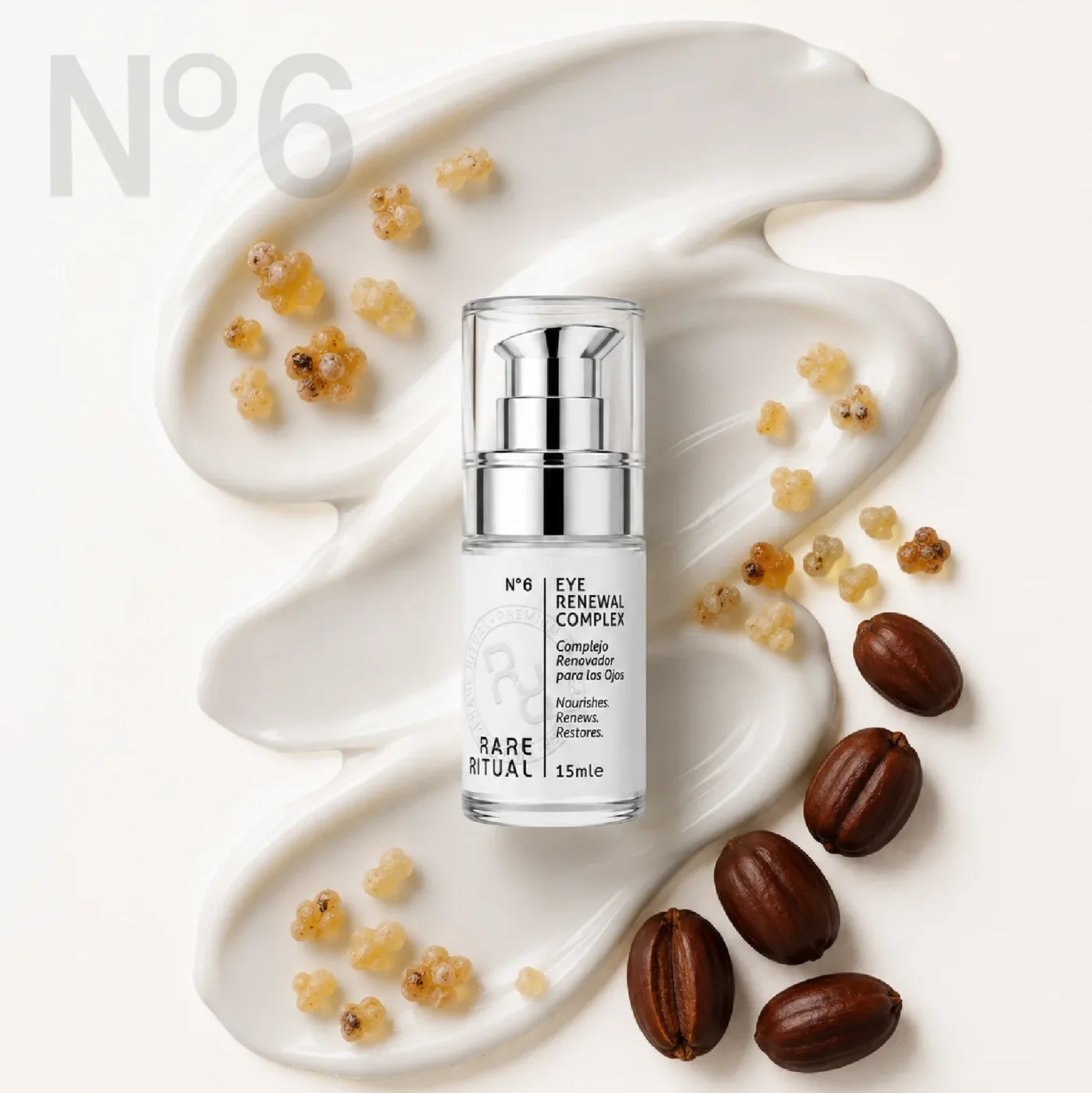
Caffeine, Frankincense Hydrosol, Rose Hydrosol, dual molecular weight Hyaluronic Acid, Bakuchiol, Tallow, Jojoba, and Panthenol all come together in No 06 Eye Renewal Complex by Rare Ritual. A fluid serum-cream formulated specifically for the periorbital zone, pH-adjusted to 5.8 to 6.2 for eye-area compatibility, and delivered via an airless pump that protects the formula's active integrity from first use to last. If you are looking for ingredients for dark circles and puffiness that also support long-term eye area renewal, this is the formula that brings them together.