Does a glycolic acid face wash or a brightening body wash actually work for dark marks and pigmentation?
Walk down any skincare aisle and you will find cleansers and body washes carrying the same ingredient names as serums. Glycolic acid. Vitamin C. Niacinamide. Alpha arbutin. The labels promise brighter skin, a more even tone and fewer dark marks, all from something you lather up and rinse away.
It sounds efficient. One step, all the benefits. The problem is that skin does not work that way.
The thirty-second problem
Most people wash their face for somewhere between a few seconds and a minute. Then the water comes in and carries almost everything away, down the drain.
For an active ingredient to change how pigment behaves, it has to reach the skin, get through the outer layer and stay there long enough to do its job. Cosmetic chemists have been saying this for years: because most of a cleanser is rinsed off, there is a ceiling on what its actives can do. Even the patents written by ingredient manufacturers describe rinse-off products as poor at leaving actives behind on the skin, which is exactly why they keep trying to engineer around it.
A cleanser is built to remove things from your skin. Asking it to also leave something behind is asking it to do two opposite jobs at once.
Why pigmentation needs time
Dark marks, sun spots and post-breakout marks sit below the very top of the skin. Fading the look of them takes ingredients that either encourage the skin to turn over faster or calm the process that produces excess pigment. Both of those take repeated, sustained contact over weeks.
That is why the research on ingredients like glycolic acid for uneven tone is built on leave-on creams and professional peels, where the acid stays on the skin for minutes, hours or overnight. A wash that touches your face for half a minute is a very different thing to what was studied, even if the ingredient name on the front is the same.
Vitamin C has a second hurdle. It is notoriously unstable in water and light, which is why good vitamin C serums come in dark, airtight packaging. A vitamin C suspended in a watery, foaming cleanser in a clear bottle in a steamy shower has a hard life before it ever touches your skin.
So is a glycolic wash completely useless?
Not quite, and it is worth being honest about this. An acid wash can give the very top layer of skin a mild polish, so your face may feel smoother straight after. That is a real, if small, effect.
There is also one well-known exception. Benzoyl peroxide washes for breakouts have research behind them, but even there the studies ask people to leave the product on the skin for a couple of minutes before rinsing. That is a deliberate extra step, not a normal face wash, and it is about bacteria on the skin, not pigment.
What we have not seen is good evidence that a quick wash with brightening ingredients visibly fades established dark marks. If a brand is selling a cleanser on that promise, ask what the claim is based on: a study of that cleanser, used the way you would use it, or a study of the ingredient in a leave-on product.
How to read the label
A few questions help cut through the marketing:
- Does it rinse off? If yes, read any pigment, anti-ageing or brightening claim with healthy suspicion. Judge it as a cleanser.
- Where is the active in the ingredient list? Ingredients are listed from most to least. A brightening ingredient sitting at the very end, after the fragrance and preservatives, is there in a tiny amount.
- Is the claim about the product or the ingredient? “Glycolic acid is known to support skin renewal” is a statement about the ingredient. It says nothing about what happens when that ingredient is in a wash.
- Is it sold as a shortcut? “Your whole Ritual in one step” is a selling line, not a description of how skin works.
What a cleanser should actually do
A good cleanser has one job: lift away oil, sunscreen, makeup and the day without stripping the skin and leaving it tight. That is it. If it does that gently, it has done its work and set your skin up for what comes next.
The real work on tone and marks happens in the steps that stay on your skin. That is where you want your actives, at a level that has been thought through, in packaging that keeps them stable.
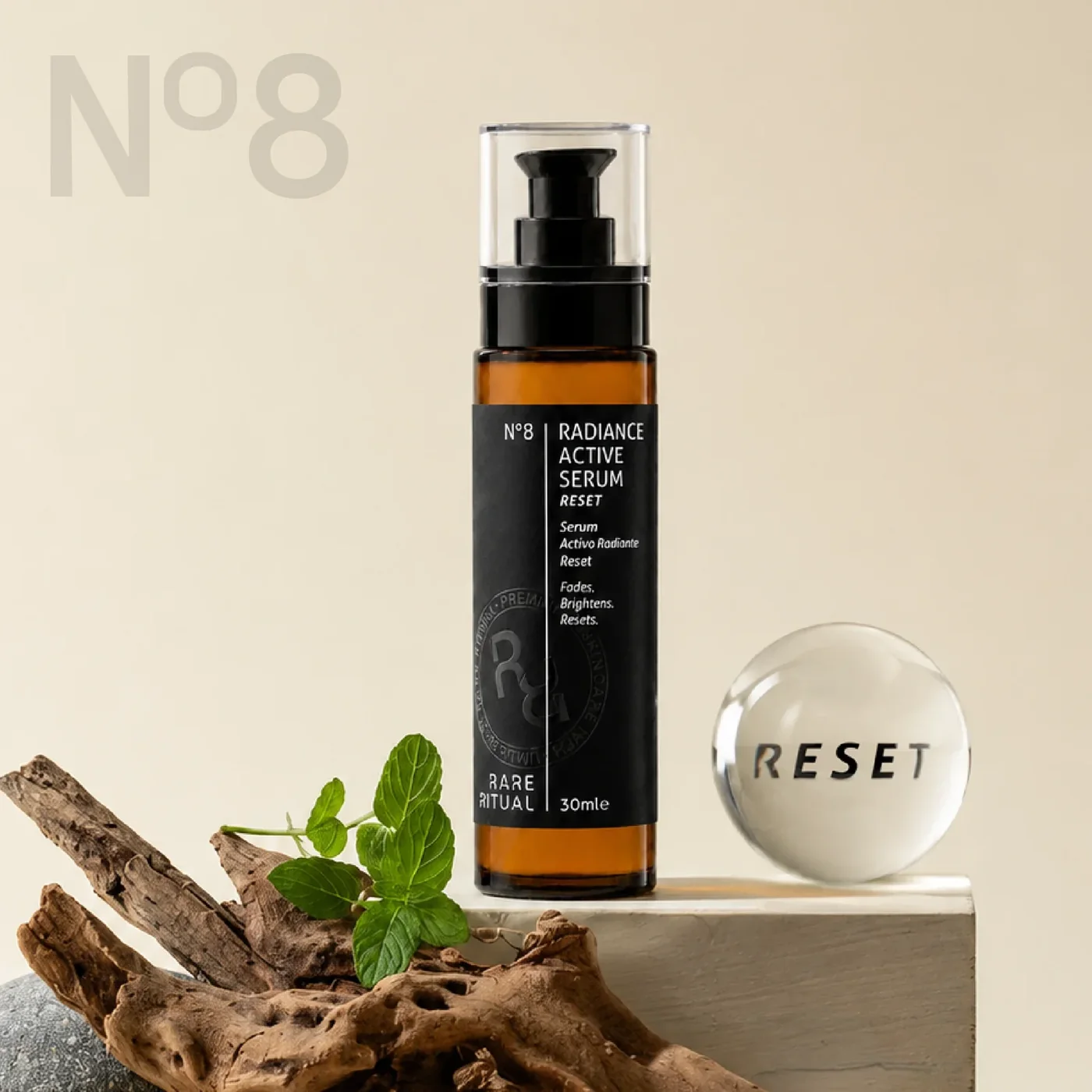
That is how we build every Rare Ritual. Our cleanser is there to cleanse. The actives for uneven tone live in leave-on formulas like No 08 Radiance Active Serum Reset and No 09 Radiance Active Serum Prevent, designed to sit on the skin and help visibly even out the look of dark marks over time, followed by a moisturiser and an oil serum.
The short version
If an ingredient is going down the drain thirty seconds after it touches your face, it is not doing much for your dark marks. Wash to cleanse. Leave on to work on the look of tone. And be wary of any product that promises you can skip the second part.
Not sure where to start? Take the Ritual Finder and we will match you to a Ritual built around your main concern.