The case for active toner for acne-prone skin starts with a simple observation. For a long time, toners occupied a specific and modest role in the skincare routine. They balanced pH after cleansing. They picked up residual traces of cleanser or hard water. They hydrated the skin slightly before a serum. These are real functions, but they are not the functions of an active ingredient treatment.
Why an active toner for acne-prone skin outperforms a basic balancing toner: the moment after cleansing is when actives absorb best, and an active toner for acne-prone skin uses that window to deliver niacinamide and centella asiatica at meaningful concentrations. Built well, an active toner for acne-prone skin becomes the most quietly powerful step in the routine.
An active toner for acne-prone skin does something fundamentally different. It delivers meaningful concentrations of active ingredients, in this case Niacinamide and Centella Asiatica, to the skin surface at the moment when the skin is most prepared to receive them: immediately after cleansing, while the barrier is briefly more open to ingredient penetration before it resets. This is not a cosmetic step. It is a treatment step in mist format.
Why an Active Toner for Acne-Prone Skin Works After Cleansing
The skin barrier is not a static wall. It is a dynamic system that responds to water contact, to cleansing, and to the pH changes that follow. Immediately after cleansing, the skin surface is briefly in a state where its permeability is slightly higher than its resting state, before the barrier reasserts itself. This is the window in which a toner delivers active ingredients most efficiently.
A water toner exploits this window to deliver water. An active toner for acne-prone skin exploits it to deliver Niacinamide and Centella, so that by the time the Active Serum is applied as the next step, the skin is already primed with these actives. The serum works into skin that is already prepared, not skin that has simply been rinsed.
Niacinamide in an Active Toner for Acne-Prone Skin
Niacinamide (Vitamin B3) is one of the most evidence-dense actives available in skincare, and its particular relevance to acne-prone, oily, and congested skin spans several mechanisms simultaneously.
Its sebum regulation function is the most relevant for oily and acne-prone skin. Niacinamide modulates signalling at the sebaceous gland level, reducing excess oil production that contributes to congestion. This effect is cumulative and consistent: the improvement builds with daily use rather than appearing as a single-application result. A visibly less oily skin surface reduces the frequency and severity of pore blockage over time.
Its melanin regulation function is relevant to the post-breakout concern of dark marks. Niacinamide inhibits the transfer of melanosomes between melanocytes and keratinocytes, which is the specific step that produces surface discolouration. Consistent twice-daily use at a meaningful concentration gradually supports a more even, less marked complexion.
Its barrier support function is relevant to the inflammation picture. A stronger barrier means less transepidermal water loss, better tolerance for other actives, and less of the background inflammation that frequently accompanies chronically congested or reactive skin. These three functions working simultaneously from the first step in the Ritual make Niacinamide a genuinely exceptional anchor active for a toner.
Centella Asiatica: Calming Inflammation at the Source
Centella Asiatica is one of the most extensively studied calming botanicals in modern cosmetic formulation, with a history of use across Ayurvedic and Traditional Chinese medicine stretching back centuries. Its key compounds, madecassic acid and asiatic acid, have been specifically studied for their ability to calm inflamed and post-breakout skin.
In the context of acne-prone skin, calming inflammation is not a passive benefit. Inflammation is both a symptom of congestion and a trigger for post-inflammatory hyperpigmentation. Managing the inflammatory response efficiently, not just clearing the congestion, is what produces better long-term outcomes. Centella Asiatica, combined with Aloe Vera and Niacinamide, brings three complementary calming mechanisms to bear in a single toner step.
Lemongrass Hydrosol and the Toning Mechanism
Lemongrass Hydrosol (Cymbopogon Citratus Leaf Water) is the aromatic water produced by steam distillation of lemongrass, and it forms the principal botanical base of the formula. It contributes mild astringency, which visibly tightens the appearance of enlarged pores and tones the skin surface without drying. The clean, bright citrus scent of lemongrass makes the misting step genuinely refreshing rather than purely functional.
In some batches, Lemon Tea Tree Hydrosol (Leptospermum Petersonii Leaf Water) may be used in place of Lemongrass Hydrosol, which has a similar pH and a stronger naturally antimicrobial character. The INCI on the label reflects the batch ingredient. Both deliver the toning and astringent function the formula requires.
Aloe Vera: Meaningful Calming at 10%
Aloe Vera (Aloe Barbadensis Leaf Juice) appears in a large number of skincare products at low concentrations where its contribution is primarily label claim. At 10% of the formula, as used here, it is a meaningfully active calming base. Its polysaccharides help calm the appearance of redness and support barrier recovery in skin that is frequently stressed, inflamed, or post-breakout. At this concentration, Aloe is doing genuine work, not decoration.
Why the Mist Format Is Optimal for Acne-Prone Skin
The choice of a fine mist delivery format for a toner designed for acne-prone and reactive skin is deliberate. Spray application delivers even, fine coverage across the entire face without mechanical pressure on congested or reactive skin. Traditional toner application with a cotton pad applies pressure to the skin surface, which can aggravate active congestion and distribute bacteria rather than actives. A fine mist avoids this entirely.
It also ensures even coverage across the full face, including areas that cotton pad application often misses, giving the actives a consistent surface area to work across with each application.
Where These Ingredients Come Together
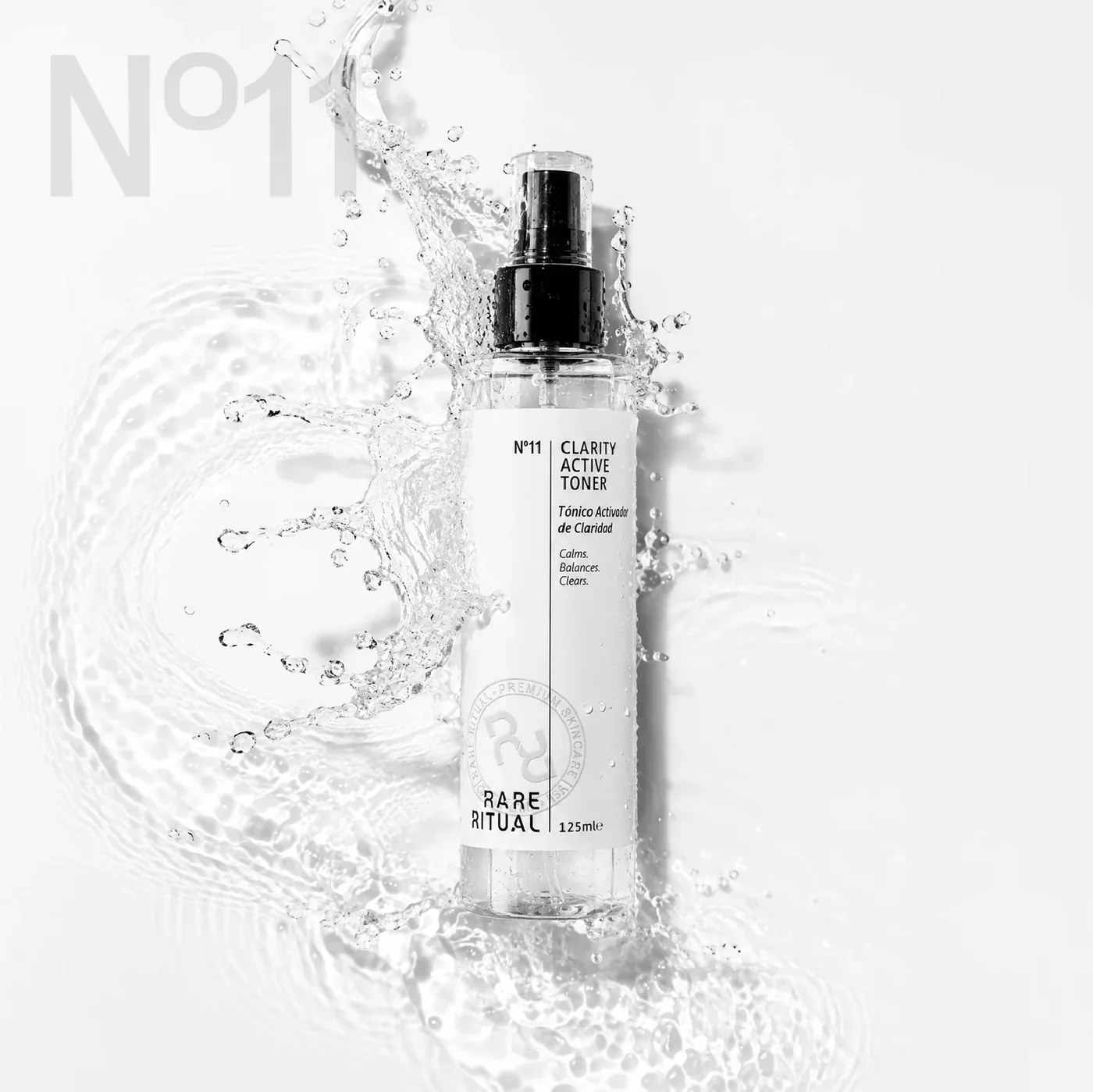
Niacinamide, Centella Asiatica, Lemongrass Hydrosol, Aloe Vera, Propanediol, and Glycerin all come together in No 11 Clarity Active Toner by Rare Ritual. An active toner for acne-prone, oily, and congested skin, formulated at pH 5.5 to 6.0 for full active efficacy and full preservative function, and fully cold-processed to preserve every delicate compound in the hydrosol and Centella extract. If your toner is currently doing nothing more than adding water, this is what more looks like.